Laws of attraction: Pollinators use multiple cues to identify flowers across continents

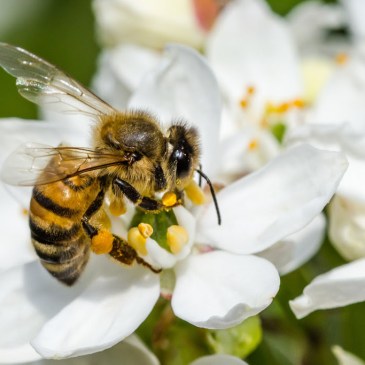
Source: National Centre for Biological SciencesSummary:Although at least 75 percent of our crop species depend on animal pollinators, little is known about their flower preferences. As global insect populations decline, it is of utmost importance for us to understand what factors attract wild pollinators to flowers, and how these preferences differ in the face of … More Laws of attraction: Pollinators use multiple cues to identify flowers across continents

A Grassroots Organization Launch of ‘Back from the Brink’

Wednesday November 15, 2017 saw the official launch of one of the most ambitious conservation programmes in England – Back from the Brink. Project partners, volunteers and other distinguished guests met at Windsor Great Park to celebrate the launch of the programme, which aims to bring 20 species back from the brink of extinction. This is … More A Grassroots Organization Launch of ‘Back from the Brink’

Cross-kingdom regulation of honeybee caste development by dietary plant miRNAs

Honeybee larvae develop into workers but not queens, in part, because their diet of beebread/pollen is enriched in plant miRNAs. While miRNAs are generally negative regulators of gene expression in eukaryotes, they also negatively regulate larval development when honeybee larvae consume beebread/pollen and take up plant miRNAs. Xi Chen and Chen-Yu Zhang’s group in Nanjing … More Cross-kingdom regulation of honeybee caste development by dietary plant miRNAs

Bumble bees make a beeline for larger flowers

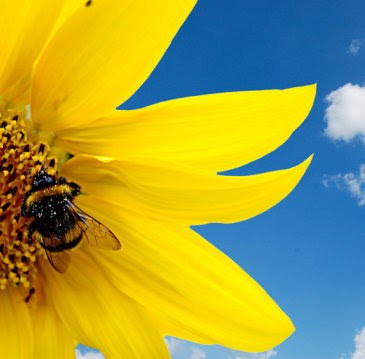
Bumble bees create foraging routes by using their experience to select nectar-rich, high-rewarding flowers. A study now suggests that bees actually forage more efficiently when flower sizes are large rather than small. This indicates that for these insect pollinators foraging quickly is more efficient than foraging accurately. Bumble bees create foraging routes by using their … More Bumble bees make a beeline for larger flowers

Climate change threatens domestic bee species

There are around 550 different bee species in Germany. Most of them are solitary bees. They don’t live in large beehives like the honeybee, but each female bee often builds multiple nests and feeds her offspring alone. Solitary bees use their short lifespan of a few weeks exclusively to reproduce and to provide food for … More Climate change threatens domestic bee species

Technology tracks ‘bee talk’ to help improve honey bee health

A researcher has devised a new bee monitoring system to better understand what more than 20,000 honeybees housed in hives in a local field are ‘saying’ to each other — looking for clues about their health.  Simon Fraser University graduate student Oldooz Pooyanfar is monitoring what more than 20,000 honeybees housed in hives in a … More Technology tracks ‘bee talk’ to help improve honey bee health

Incredibly stupid things a beekeeper can do

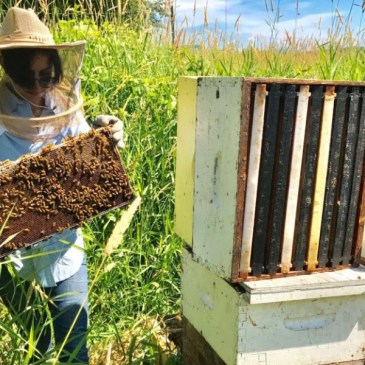
The worst beekeeping mistakes come from putting off what you should have done yesterday. Somehow, problems inside a bee hive don’t get better by themselves. I keep thinking they will, but they don’t. I normally remove my honey supers by June 30 because that is the start of our nectar dearth. Once the supers come off, the … More Incredibly stupid things a beekeeper can do

Varroa mites — bees’ archenemies — have genetic holes in their armor

Seemingly indestructible Varroa mites have decimated honeybee populations and are a primary cause of colony collapse disorder, or CCD. Scientists have found genetic holes in the pests’ armor that could potentially reduce or eliminate the marauding invaders. The team’s results have identified four genes critical for survival and two that directly affect reproduction. Michigan State … More Varroa mites — bees’ archenemies — have genetic holes in their armor

Nation’s Beekeepers Lost 33 Percent of Bees in 2016-17

The University of Maryland/Bee Informed Partnership informs us that Beekeepers across the United States lost 33 percent of their honey bee colonies during the year spanning April 2016 to April 2017, according to the latest preliminary results of an annual nationwide survey. Rates of both winter loss and summer loss — and consequently, total annual … More Nation’s Beekeepers Lost 33 Percent of Bees in 2016-17