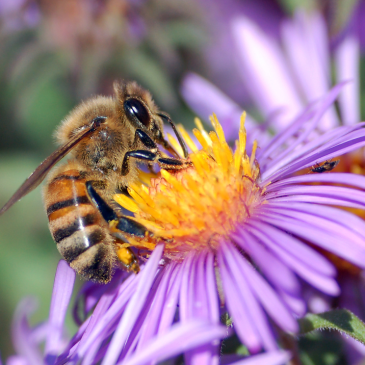
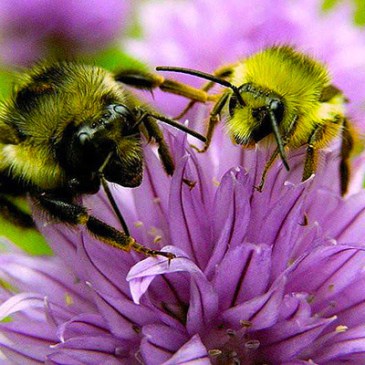
Rising levels of atmospheric carbon dioxide have reduced protein in goldenrod pollen, a key late-season food source for North American bees, a Purdue University study shows.

Researchers found that the overall protein concentration of goldenrod pollen fell about one-third from the onset of the Industrial Revolution to the beginning of the 21st century. Previous studies have shown that increases in carbon dioxide can lower the nutritional value of plants such as wheat and rice — staple crops for much of the … More Rising levels of atmospheric carbon dioxide have reduced protein in goldenrod pollen, a key late-season food source for North American bees, a Purdue University study shows.
Honeybee populations are under attack but the founders of nonprofit HoneyLove believe bees’ best future is in cities. And Save the Bees supports well managed urban groups like HoneyLove.

By Daniel B. Wood West Los Angeles, Calif. — Butterflies and hummingbirds flit in the shafts of light behind Chelsea McFarland as she tells a group of about 20 interested volunteers – residents ages 6 to 66 from around this West Los Angeles suburb – what they can do to combat the dramatic worldwide depletion of the … More Honeybee populations are under attack but the founders of nonprofit HoneyLove believe bees’ best future is in cities. And Save the Bees supports well managed urban groups like HoneyLove.

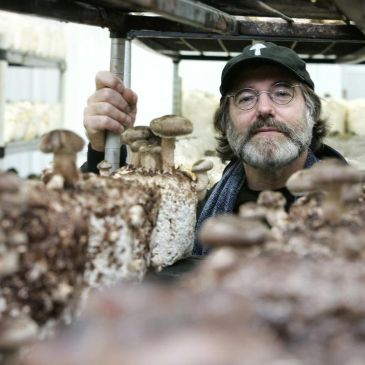
The mushroom dream of a ‘long-haired hippy’ could help save the world’s bees  

By EVAN BUSH The Seattle Times SEATTLE—The epiphany that mushrooms could help save the world’s ailing bee colonies struck Paul Stamets while he was in bed. Years ago, in 1984, Stamets had noticed a “continuous convoy of bees” travelling from a patch of mushrooms he was growing and his beehives. The bees actually moved wood chips to … More The mushroom dream of a ‘long-haired hippy’ could help save the world’s bees  

Bees prefer warm violets in cool forests, scientists discover

Research by scientists at Saint Louis University’s Bernhardt/Meier Laboratory engaged in a study of Missouri bees and wildflowers has been published in the online Journal of Pollination Ecology. Peter Bernhardt, Ph.D., a professor of biology at SLU and research associate at the Missouri Botanical Garden and the Royal Botanic Gardens and Domain Trust in Sydney, New … More Bees prefer warm violets in cool forests, scientists discover

Woolworths and Coles cave in to pressure to abandon product accused of killing bees

Coles and Woolworths are abandoning an insecticide product which contains a controversial ingredient that has been linked to harming bee populations essential for pollination, The New Daily can reveal. More than 30,000 Australians have signed a petition, launched by global consumer group SumOfUs, calling on Australian retailers to stop selling insecticides containing neonicotinoids, including Yates Confidor which has been … More Woolworths and Coles cave in to pressure to abandon product accused of killing bees

Laws of attraction: Pollinators use multiple cues to identify flowers across continents

Source: National Centre for Biological SciencesSummary:Although at least 75 percent of our crop species depend on animal pollinators, little is known about their flower preferences. As global insect populations decline, it is of utmost importance for us to understand what factors attract wild pollinators to flowers, and how these preferences differ in the face of … More Laws of attraction: Pollinators use multiple cues to identify flowers across continents

A Grassroots Organization Launch of ‘Back from the Brink’

Wednesday November 15, 2017 saw the official launch of one of the most ambitious conservation programmes in England – Back from the Brink. Project partners, volunteers and other distinguished guests met at Windsor Great Park to celebrate the launch of the programme, which aims to bring 20 species back from the brink of extinction. This is … More A Grassroots Organization Launch of ‘Back from the Brink’

Varroa mites — bees’ archenemies — have genetic holes in their armor

Seemingly indestructible Varroa mites have decimated honeybee populations and are a primary cause of colony collapse disorder, or CCD. Scientists have found genetic holes in the pests’ armor that could potentially reduce or eliminate the marauding invaders. The team’s results have identified four genes critical for survival and two that directly affect reproduction. Michigan State … More Varroa mites — bees’ archenemies — have genetic holes in their armor

Nation’s Beekeepers Lost 33 Percent of Bees in 2016-17

The University of Maryland/Bee Informed Partnership informs us that Beekeepers across the United States lost 33 percent of their honey bee colonies during the year spanning April 2016 to April 2017, according to the latest preliminary results of an annual nationwide survey. Rates of both winter loss and summer loss — and consequently, total annual … More Nation’s Beekeepers Lost 33 Percent of Bees in 2016-17

The fight to save the rusty-patched bumble bee and how you can help

Its population and range have declined by 87 percent. Now, there’s a 90 percent probability of extinction for the bee if no action is taken to save it. The Rusty-Patched Bumble Bee was meant to become the first bee in North America listed under the Endangered Species Act (ESA), effective February 10, 2017. However, a … More The fight to save the rusty-patched bumble bee and how you can help