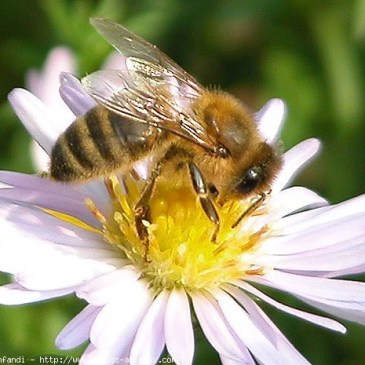
Nutrition matters: Stress from migratory beekeeping may be eased by access to food

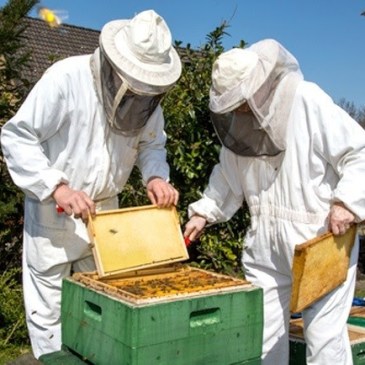
In the first large-scale and comprehensive study on the impacts of transporting honey bees to pollinate various crops, North Carolina State University research shows that travel can adversely affect bee health and lifespan. Some of these negative impacts may be reduced by moving bee colonies into patches with readily available food or by providing supplemental … More Nutrition matters: Stress from migratory beekeeping may be eased by access to food
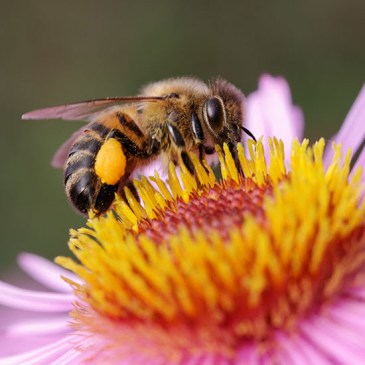
Loss of wild insects hurts crops around the world

Researchers from the University of Calgary studying data from 600 fields in 20 countries have found that managed honey bees are not as successful at pollinating crops as wild insects, primarily wild bees, suggesting the continuing loss of wild insects in many agricultural landscapes has negative consequences for crop harvests. Lawrence Harder, University of Calgary … More Loss of wild insects hurts crops around the world

Wild bee decline threatens US crop production

Following Obama’s call for pollinator assessment, first-ever national bee map shows much farmland at risk The first national study to map  US wild bees, from the University of Vermont, suggests they’re disappearing in many of the country’s most important farmlands. If losses of these pollinators continue, the new nationwide assessment indicates that farmers will face … More Wild bee decline threatens US crop production

Supporting pollinators could have big payoff for Texas cotton farmers

Increasing the diversity of pollinator species can dramatically increase cotton production, according to a new study from the University of Texas at Austin. In South Texas alone, this could boost cotton production by up to 18 percent, yielding an increase in annual revenue of more than $1.1 million. Bee hovers over cotton flower in South … More Supporting pollinators could have big payoff for Texas cotton farmers

Pollinators Help One-third Of The World’s Food Crop Production

Pollinators affect 35 percent of the world’s food crop production, increasing the output of 87 of the leading crops worldwide, finds a study co-authored by a UC Berkeley conservation biologist. The study is the first global estimate of food crop production that is reliant upon animal pollination. It comes one week after a National Research … More Pollinators Help One-third Of The World’s Food Crop Production

Ornamental plants for conserving bees and other beneficial insects

Insects play a vital role in ecosystem health, helping to aerate soil, keeping the natural system in balance, and preventing detrimental pests from taking over essential natural resources, according to the American Society for Horticultural Science. Additionally, insects provide critical biological services such as pollination and biological controls. The authors of a study say that … More Ornamental plants for conserving bees and other beneficial insects

American beekeepers lost 44 percent of bees in 2015-16

American beekeepers lost 44 percent of bees in 2015-16 Summer losses rival winter losses for the second year running United States beekeepers lost 44 percent of their honey bee colonies from April 2015 to April 2016, according to the latest preliminary results of an annual nationwide survey. This is a higher overall loss rate than … More American beekeepers lost 44 percent of bees in 2015-16

Making a home for Leaf-cutter bees

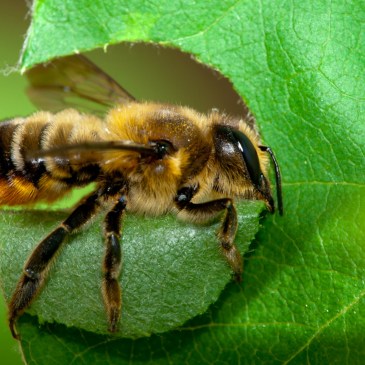
Suzanne Rex, a volunteer assistant at the Bumblebee Conservation, England, has had her eyes opened to the huge diversity and importance of pollinators in our world. One group of bees which she finds particularly interesting are Leaf-cutter bees and here she writes about them. Leaf-cutter bee (Megachile sp.) in a nest. Photo: Anne Donelly”As well … More Making a home for Leaf-cutter bees

Honey bee colonies fall by nearly 12% globally

The number of honey bee colonies fell by nearly 12% last winter, an international study indicates. The study found that the spring and early summer months of 2015, from March to July, were cold in Norway, Scotland, Sweden, Denmark and Ireland, with mean temperatures ranging from 12.8 – 14.4 °C. This may have had negative … More Honey bee colonies fall by nearly 12% globally

Let’s keep planting wildflowers and help the bees at the same time

Here are some expert tips Spring is the best time to sow seeds. Wait until the possibility of frost is over before sowing.Wildflowers will flourish in most soil. If grass or weeds are growing there now, so will wildflowers. Aggressive weeds can take over your wildflower garden, so continue to weed the area, especially in … More Let’s keep planting wildflowers and help the bees at the same time